02 · Test before teaching
Preview the pattern, then decide whether it should persist.
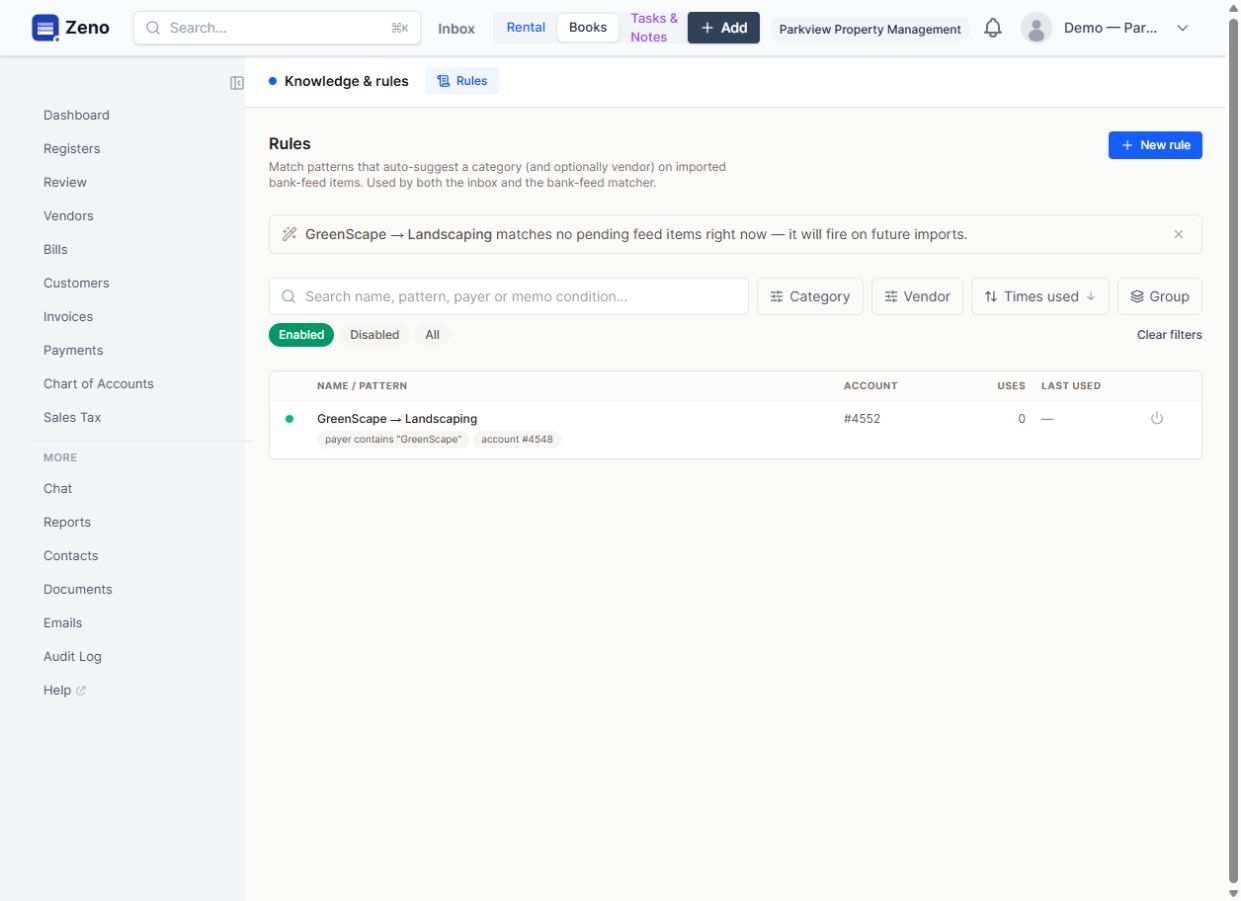
A dry run shows what a rule would catch. Batch application groups work by the winning rule, fills only blank fields, and rechecks every match at write time.
A useful system should make the twentieth familiar transaction easier than the first. Zeno ERP separates exact rules from judgment-bearing knowledge, turns procedures into playbooks, and keeps every retained instruction inspectable and owned by the organization.
Read how it works in the docs →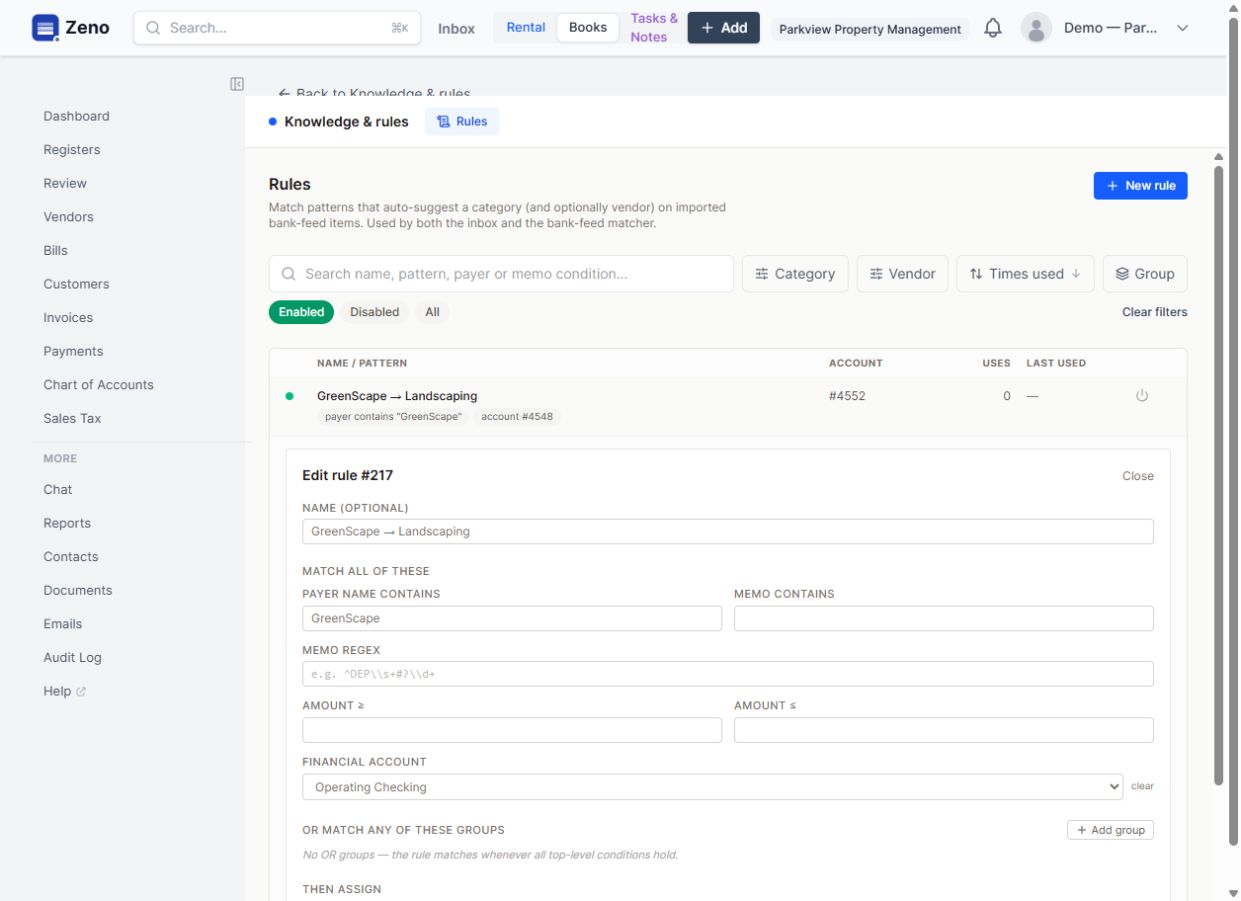
Rules run deterministically at ingest. Confirmed knowledge supplies relevant judgment only where anchored. Playbooks preserve multi-step procedures. Work logs and audit trails show how those instructions affected real work.
A dry run shows what a rule would catch. Batch application groups work by the winning rule, fills only blank fields, and rechecks every match at write time.
A vendor mapping is not relearned separately by the parser and bank queue. Rules fire at both entry points; nuanced quirks are retrieved as anchored knowledge only when relevant.
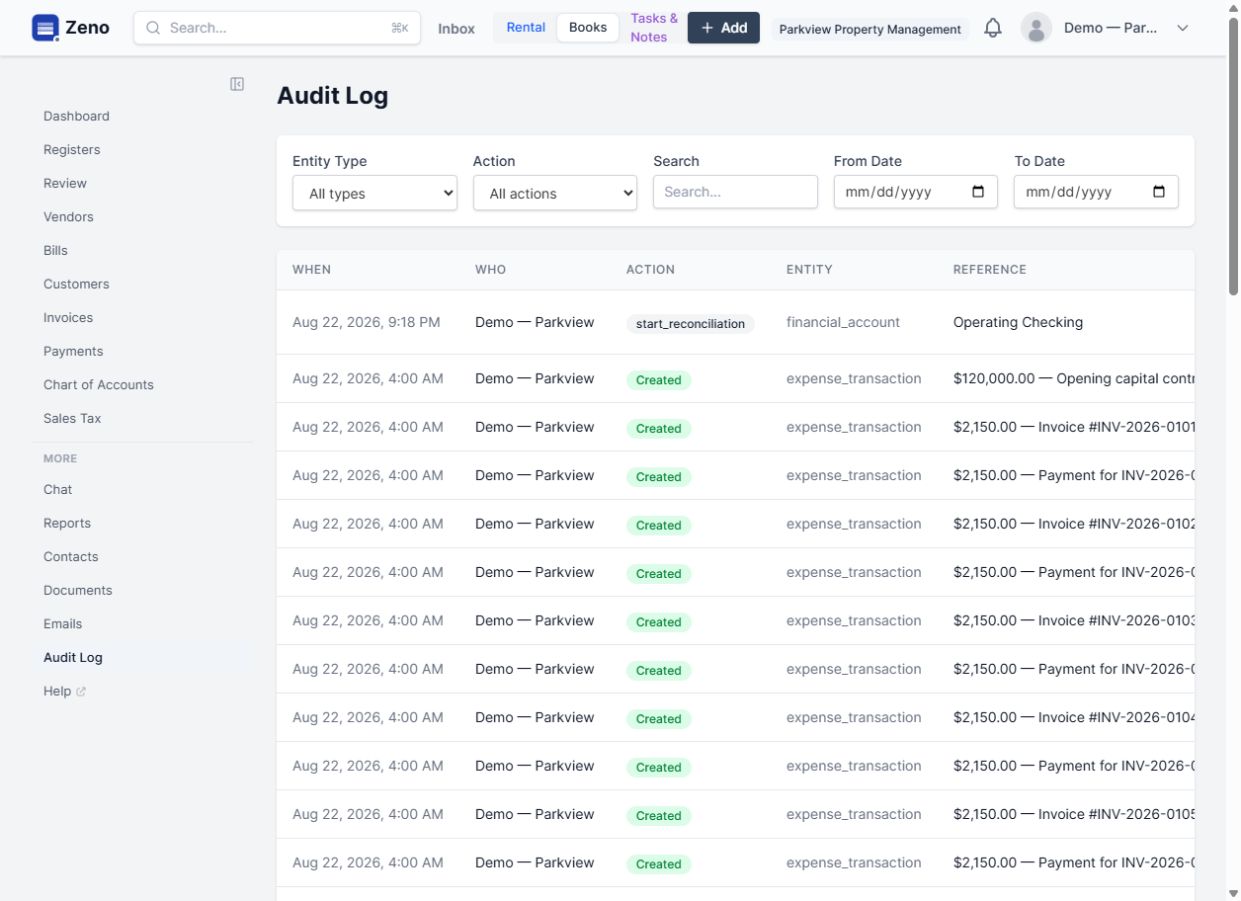
Rule-provided values retain their source until changed. Work logs describe the reason for a job, and the audit log preserves the exact writes and actor behind resulting records.
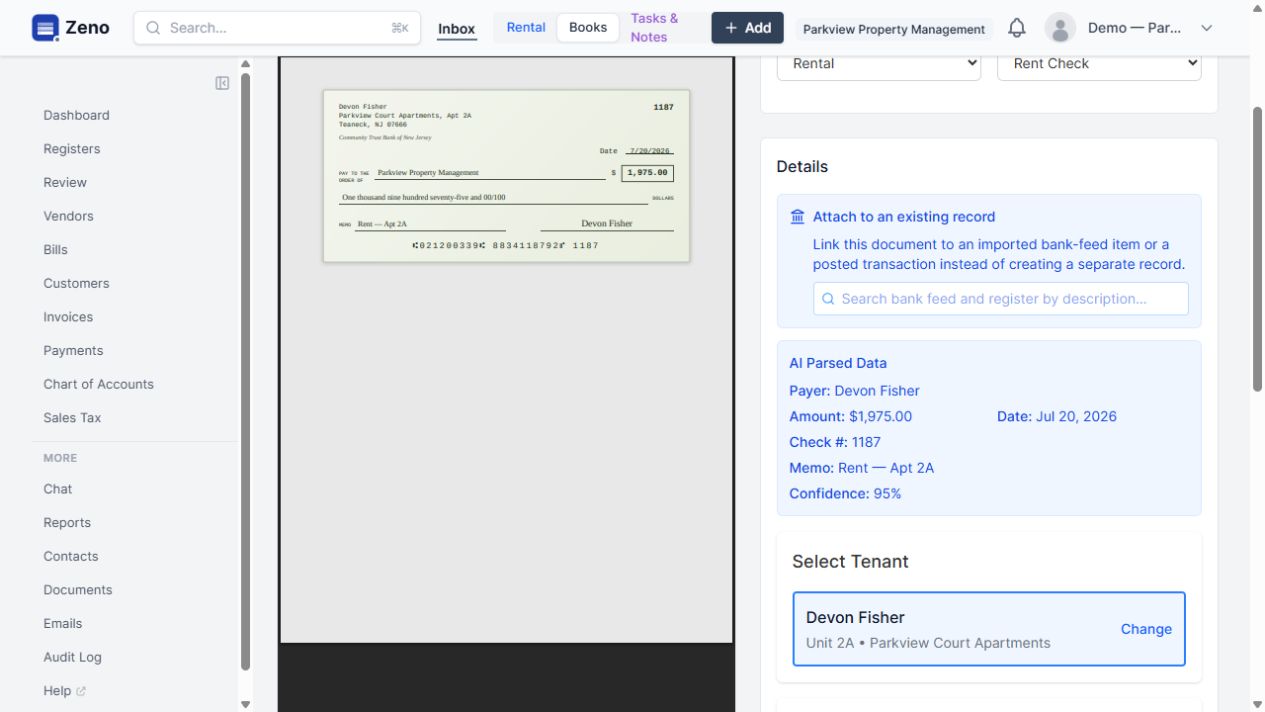
Direct captures from the public Parkview Property Management sandbox on August 22, 2026. Sample names and financial data are synthetic; the product interface has not been recreated.
Keep cheap, certain decisions deterministic and reserve model judgment for the places that need it.
Resolve a vendor, category, route, document type, or procedure.
Use a rule for exact mapping, knowledge for judgment, or a playbook for process.
Dry-run patterns and anchor knowledge to the records it concerns.
Knowledge and playbooks remain drafts until a human accepts them.
Run rules at ingest and retrieve only bounded, relevant context.
Edit, disable, export, or delete retained instructions.
Deterministic mappings run without model cost or interpretive variation.
Knowledge is plain language, relevant-record anchored, and human-confirmed.
The organization can inspect, edit, disable, export, and delete what it owns.