Documents at the center

The document is the beginning of the workflow, not an attachment at the end.

Checks, invoices, leases, receipts, statements, certificates, and job records all enter through one document system. Zeno reads them once, routes them to the right module, suggests the work they imply, and keeps the original evidence beside every result.

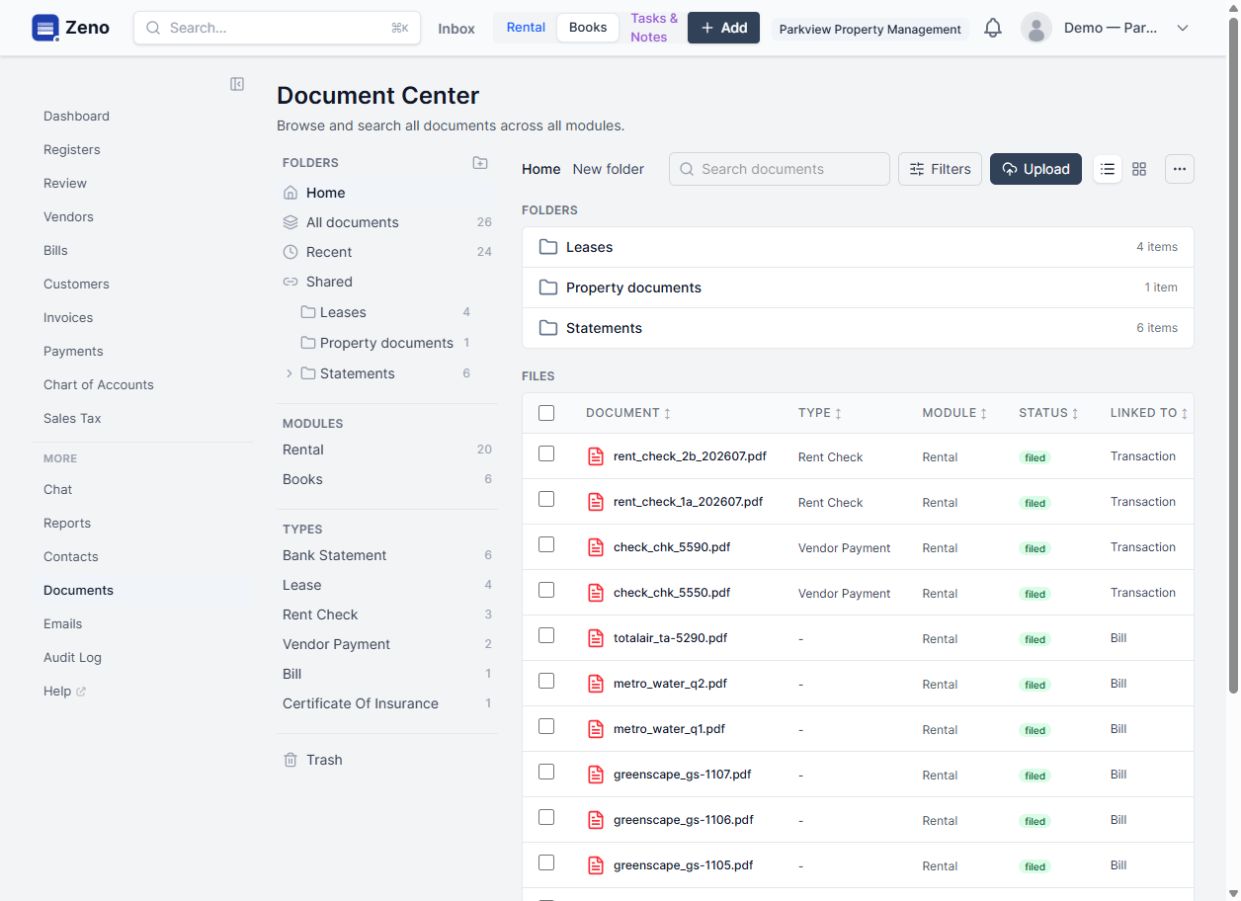
Zeno Document Center showing filed, parsed, and linked documents
One libraryDocuments from every enabled module share one center.
Five entry pathsUpload, email, watched folder, connected source, or agent draft.
Original retainedThe source stays linked through review, posting, payment, and reporting.
One document lifecycle

Enter once. Understand once. Keep the evidence everywhere.

A central document record carries classification, extraction, entity matches, suggestions, status, provenance, sharing, and the path back to what it created. Modules do not invent disconnected upload and parsing systems.

02 · Unified intake

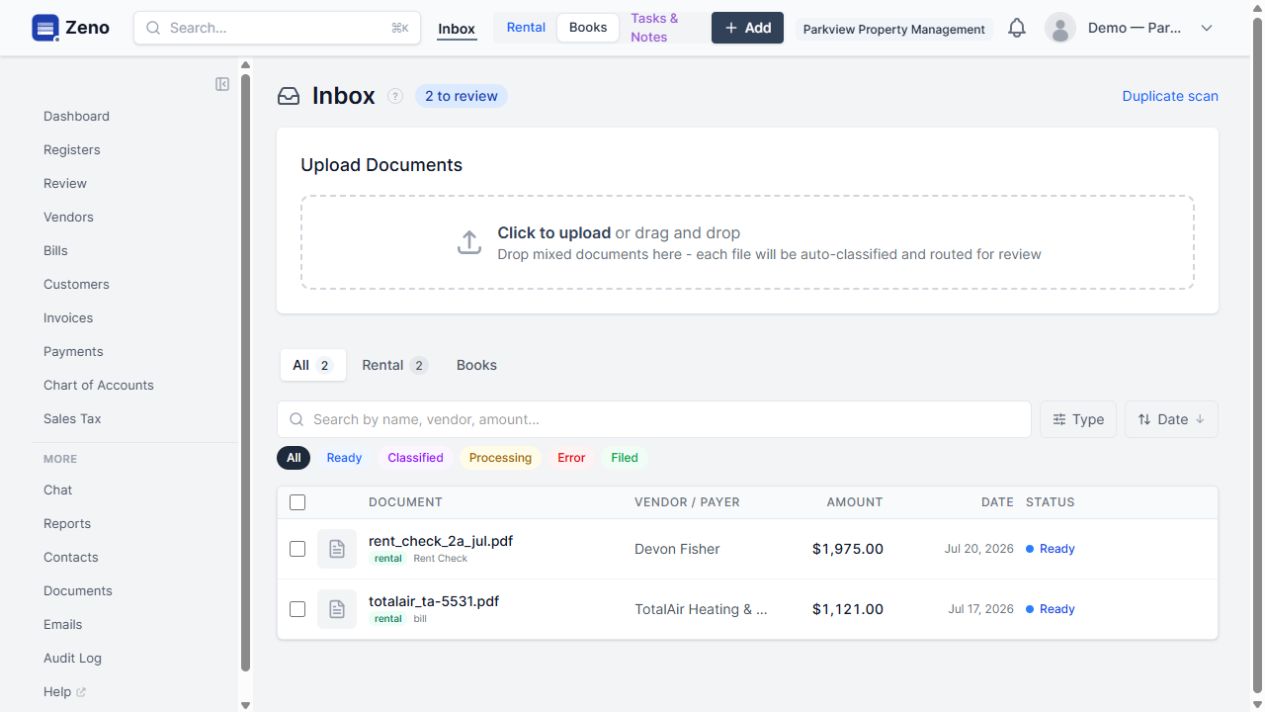
Different documents enter one queue and head to the right workflow.

Zeno classifies a rent check differently from a vendor bill or statement, then routes it without losing the common lifecycle underneath. Low-confidence cases stay visible for review.
03 · Source beside suggestion

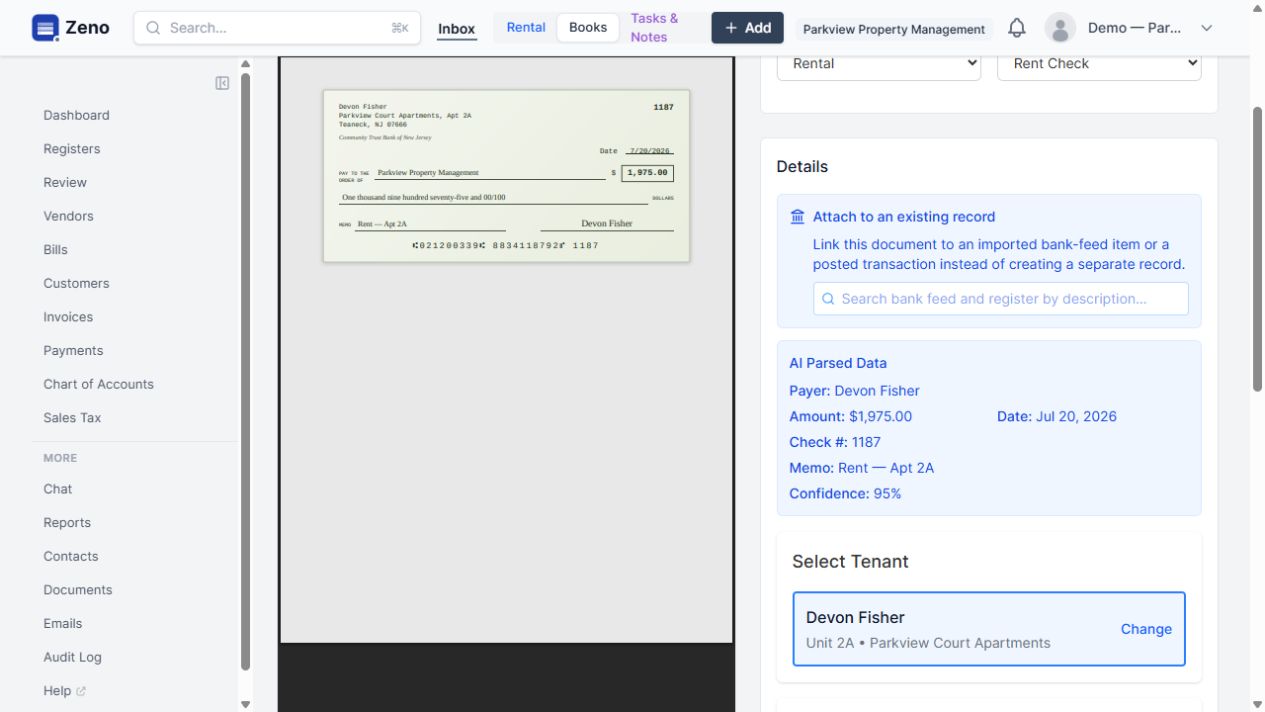
Review extracted facts while looking at the evidence.

Payer, date, amount, reference, and likely entity appear beside the original page. A reviewer corrects judgment calls in context and decides when the document becomes operational and financial work.

04 · Filed against the result

The workflow produces a record, not another pile of fields.

Once approved, the document creates or supports the real payment, bill, lease, or transaction. That record lives in the operational module and on the ledger, with the source still one click away.

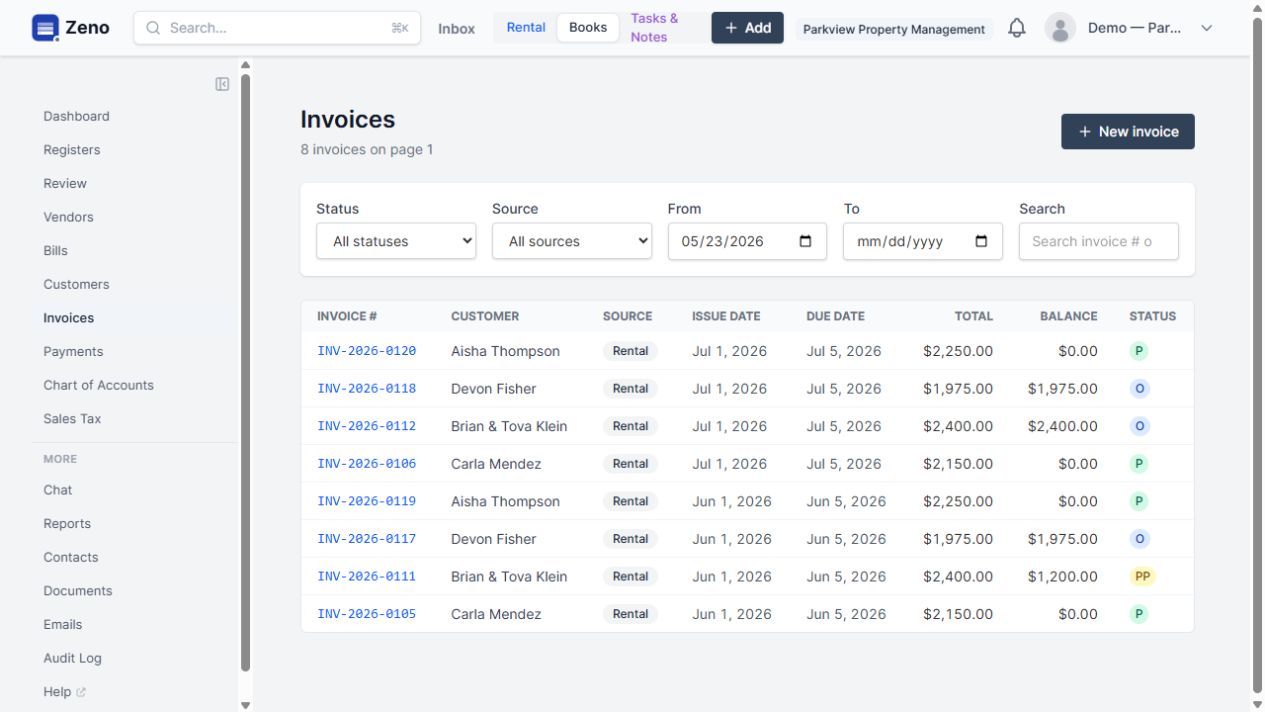
Direct captures from the public Parkview Property Management sandbox on August 22, 2026. Sample names and financial data are synthetic; the product interface has not been recreated.

The document lifecycle

From arrival to filed evidence.

Classification and extraction matter only when they lead safely into the real domain workflow.

01

Arrive

Receive a file by upload, email, watched folder, connected source, or agent draft.

02

Read once

Run OCR once and preserve text for every downstream consumer.

03

Classify and route

Identify type and module while leaving uncertainty in review.

04

Extract and resolve

Match entities, detect duplicates, and apply relevant rules and knowledge.

05

Confirm the work

Show the source beside the proposed operational or accounting record.

06

File against the result

Retain the original, parsed data, links, provenance, and audit history.

Evidence architecture

Documents remain useful after data entry is finished.

One canonical source

Reclassification and reparsing update one record instead of creating disconnected copies.

Suggestions, not silent writes

Extracted facts remain reviewable wherever judgment or financial consequence exists.

Portable and controlled

Documents can be searched, shared with expiring links, exported, restored, or removed.

The rest of the system

One capability makes the next one stronger.

Explore the platform →

Bring us the workflow that should be easier.

We’ll map it against the working product and show you exactly where Zeno changes the job.