Zeno Operator

Give your AI agent a real job inside Zeno.

Use the terminal or desktop AI client you already prefer. Zeno Operator gives it governed tools across the operation, the same permissions as the signed-in user, and a durable place to leave the work, reasoning, rules, and organizational knowledge behind.

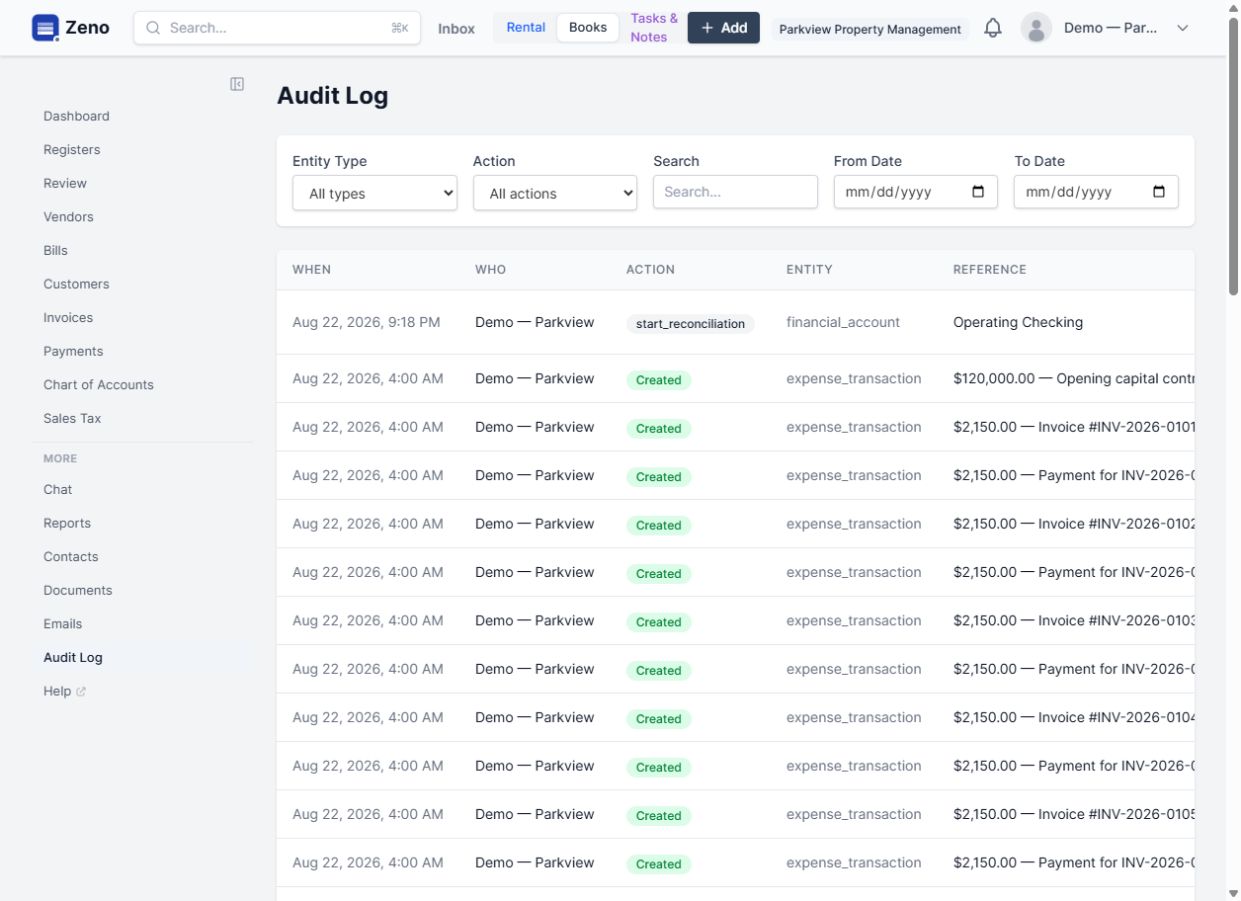
Zeno audit log showing attributed reconciliation and accounting activity
Same permissionsThe agent can only see and do what the connected user can.
Review-gatedIrreversible actions and document entries stop for confirmation.
Durable memoryRules, knowledge, playbooks, work logs, and audits survive the session.
Bring your own agent

Ask for the outcome. Keep control of the consequential decisions.

The client can be a terminal or desktop app. Zeno supplies the governed tools, organizational context, review gates, and durable record behind it.

Zeno Operator · example session

$ Reconcile Operating Checking and prepare anything missing for review.

Found the filed statement and account register.

Matched the unambiguous statement activity.

Prepared genuine gaps using saved rules and history.

Recorded the proposed work and supporting evidence.

Waiting for approval before posting.

Beyond chat

The agent works in the system, and the system remembers.

An operator can process a batch, investigate exceptions, prepare a reconciliation, enter records, or answer a ledger question. Consequential decisions still pass through approval, and every write retains its human, session, reason, and evidence.

02 · Real work, real evidence

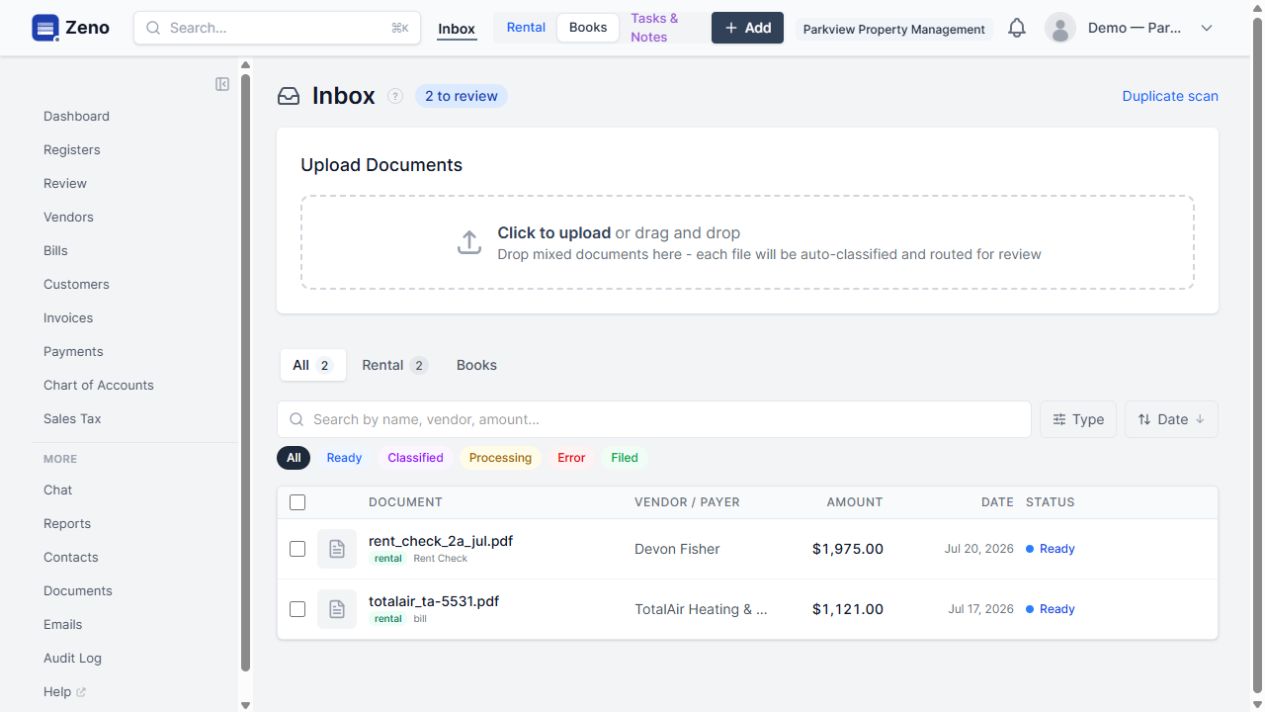
Take a document batch from intake to a reviewable plan.

Documents, accounts, vendors, customers, properties, projects, and the ledger share one operating model. The agent can read the source, resolve entities, prepare entries, and stop where a human decision belongs.
03 · Computed review gate

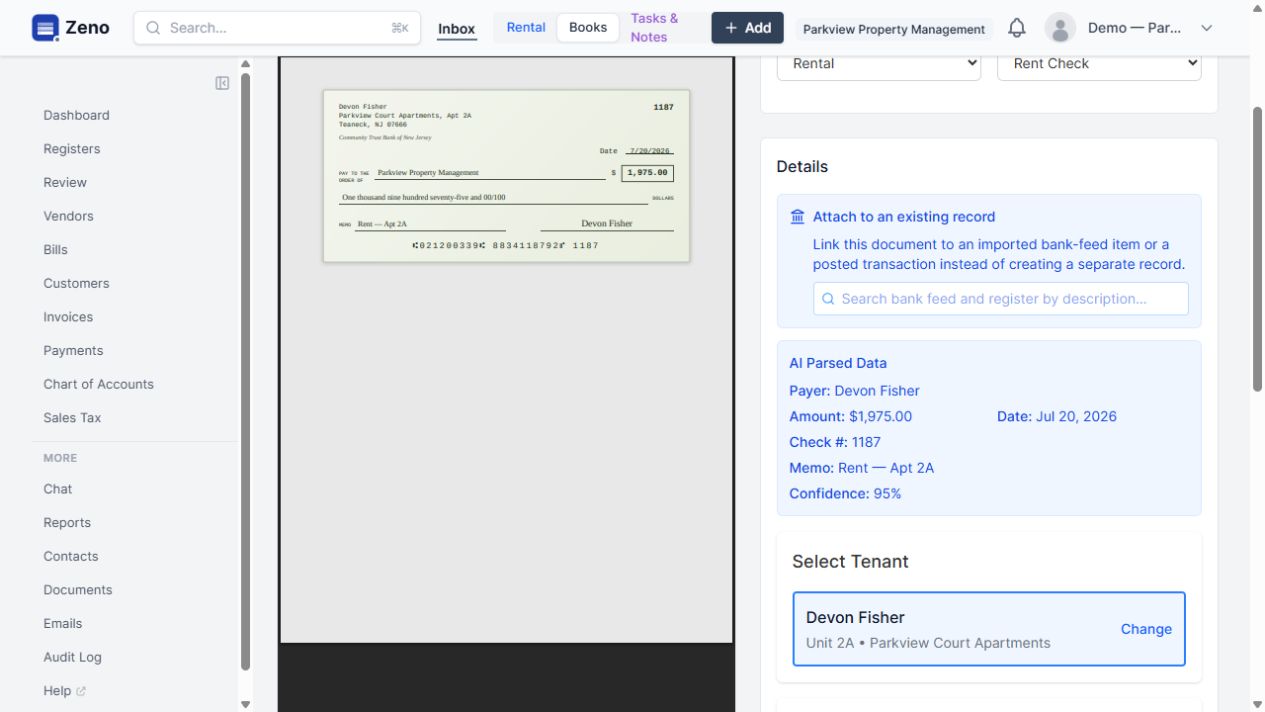
The agent's reading is checked against Zeno's own parse.

For document-derived entries, Zeno compares server extraction with what the agent proposes. Material disagreements remain a visible review problem instead of slipping through as polished prose.

04 · The organization learns

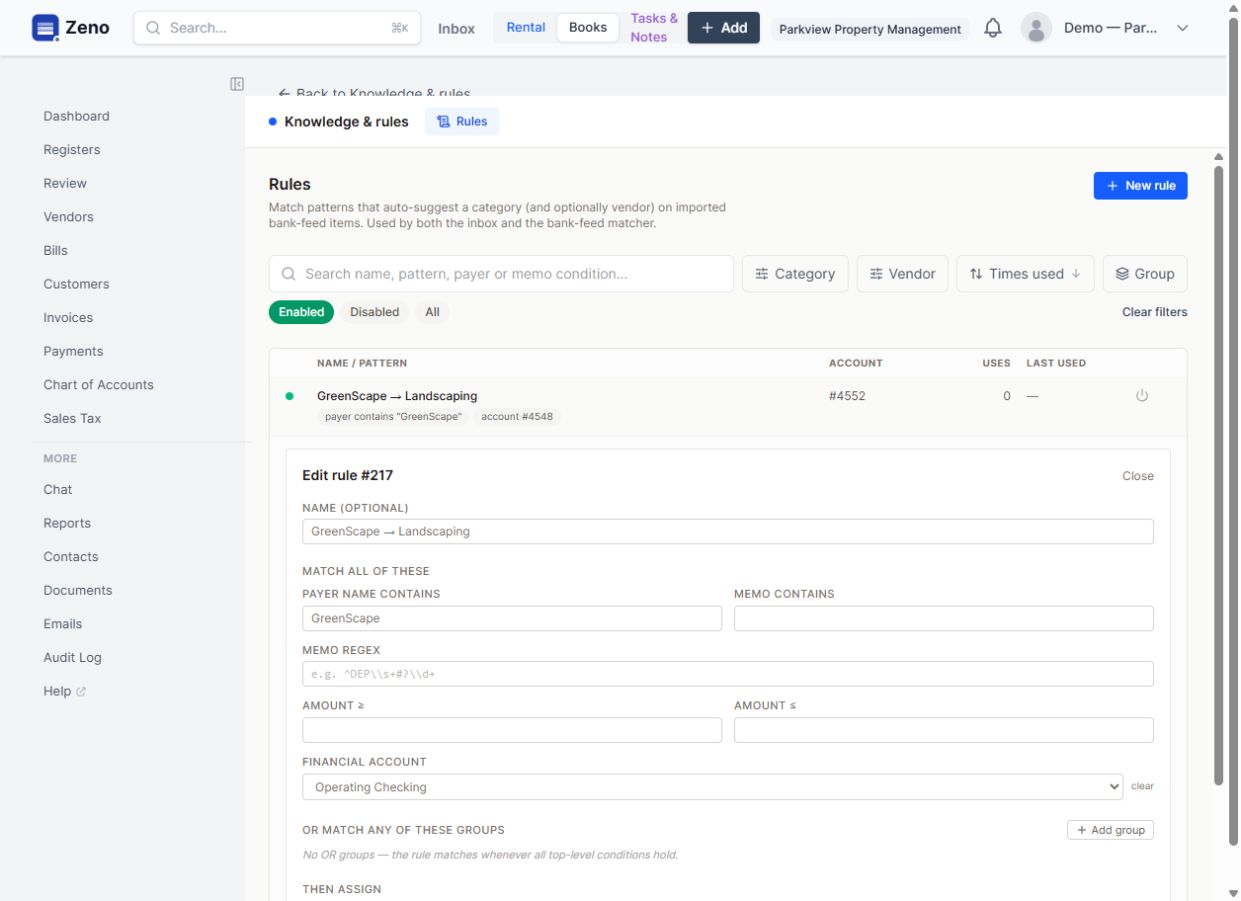
A correction can become a rule or confirmed playbook.

Repeatable mappings become deterministic rules. Judgment becomes anchored knowledge. Multi-step procedures become playbooks that later agents can run after an administrator confirms what should persist.

Direct captures from the public Parkview Property Management sandbox on August 22, 2026. Sample names and financial data are synthetic; the product interface has not been recreated.

The operating contract

A long job with a beginning, controls, and a retained end.

MCP is the connection. The product is the operating discipline on both sides of it.

01

Connect as yourself

Authorize the AI client to the right organization with your existing role.

02

Ask for an outcome

Describe the job: reconcile, process, investigate, prepare, or report.

03

Gather relevant context

Receive only the records, rules, evidence, and anchored knowledge needed.

04

Prepare reviewable work

Do the heavy reading and comparison, then name consequential actions.

05

Approve the boundary

Confirm irreversible or financially consequential work before commit.

06

Retain the result

Keep explanatory work logs, exact audit writes, and confirmed learning.

Agent governance

The protocol is not the moat. The operating memory and controls are.

No shadow permissions

An AI client never gains access beyond the human who connected it.

No invisible learning

Knowledge and playbooks begin as drafts and influence future work only after confirmation.

Two records of accountability

The work log explains what and why; the audit log records exact changes.

The rest of the system

One capability makes the next one stronger.

Explore the platform →

Bring us the workflow that should be easier.

We’ll map it against the working product and show you exactly where Zeno changes the job.